
Beginning a ketogenic lifestyle can be daunting, especially with mixed advice on what to eat, when to eat, and how to dodge the notorious keto flu. Our well-structured 7 Day Keto Diet Plan helps you transition smoothly into ketosis with delicious meals that not only support weight loss but also boost energy and overall well-being.
This comprehensive guide equips you with all the essentials for your first week on the keto diet, including detailed meal plans, curated shopping lists, efficient meal prep strategies, and expert advice. Designed specifically for beginners, this 7 Day Keto Diet Plan supports weight loss, boosts energy, and lays the foundation for a sustainable, healthier lifestyle.
Understanding the Ketogenic Diet: The Foundation for Your 7 Day Keto Diet Plan Success
The ketogenic diet is a high-fat, moderate-protein, and low-carbohydrate eating plan that triggers your body to use ketones instead of glucose for energy. By limiting your daily carbohydrate intake to 20-50 grams, your liver converts stored fat into ketones—a process known as ketosis, which is at the core of this 7 Day Keto Diet Plan.
Research published in the Journal of Clinical Medicine demonstrates that ketogenic diets can lead to significant weight loss, improved insulin sensitivity, and enhanced cognitive function. The diet typically consists of approximately 70-75% fat, 20-25% protein, and 5-10% carbohydrates.
Understanding these macronutrient ratios is crucial for your success during the first week. Many beginners struggle because they don’t consume enough fat or accidentally exceed their carbohydrate limits. The key is focusing on whole, nutrient-dense foods while maintaining the proper macronutrient balance.
What to Expect During Your First Week on the 7 Day Keto Diet Plan
Your first week on the ketogenic diet is a period of significant metabolic adaptation. During days 1-3, your body will deplete its glycogen stores, which can lead to rapid initial weight loss of 2-5 pounds. However, much of this initial loss is water weight, not fat.
Between days 3-7, many people experience what’s commonly called the “keto flu.” Symptoms may include fatigue, headaches, irritability, and difficulty concentrating. These symptoms occur because your body is learning to efficiently use ketones for fuel instead of glucose. According to research from the American Journal of Clinical Nutrition, these symptoms typically resolve within a week as your body becomes keto-adapted.
To minimize these side effects, focus on staying hydrated, maintaining adequate electrolyte levels, and getting sufficient sleep. Many people find that increasing their sodium intake through bone broth or adding a pinch of high-quality sea salt to their water helps alleviate symptoms.
Essential Foods for a Successful 7 Day Keto Diet: What to Eat
Building your meals around the right foods is fundamental to keto success. Your grocery list should emphasize high-quality fats, moderate amounts of protein, and very low-carbohydrate vegetables.
Healthy Fats (70-75% of calories): Avocados, olive oil, coconut oil, grass-fed butter, nuts, seeds, and fatty fish like salmon and mackerel should form the foundation of your meals. These foods provide sustained energy and help you feel satisfied between meals.
Quality Proteins (20-25% of calories): Choose grass-fed beef, free-range poultry, wild-caught fish, eggs, and full-fat dairy products. Protein is essential for maintaining muscle mass during weight loss and supporting metabolic function.
Low-Carb Vegetables (5-10% of calories): Leafy greens, broccoli, cauliflower, zucchini, bell peppers, and asparagus provide essential nutrients and fiber while keeping carbohydrate intake minimal. These vegetables also add volume and variety to your meals without compromising ketosis.
Your Complete 7 Day Keto Meal Plan for Beginners
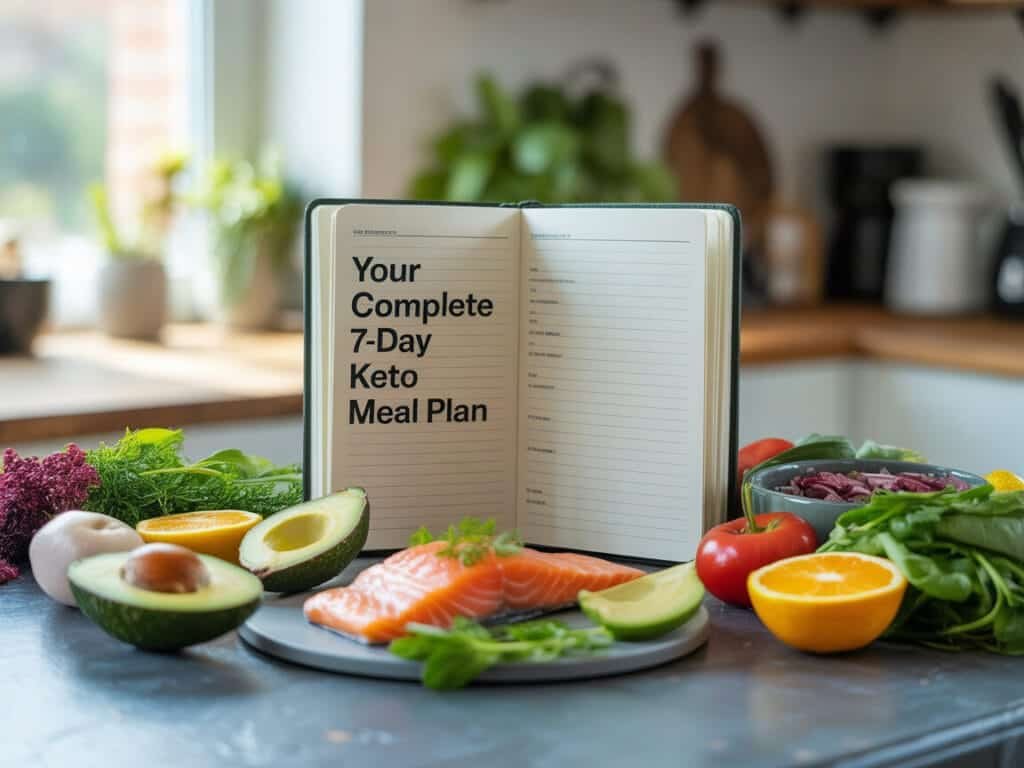
Day 1: Easing into Ketosis on Your 7 Day Keto Diet Plan
Breakfast: Avocado and spinach omelet cooked in grass-fed butter (3 eggs, 1/2 avocado, 1 cup spinach, 1 tablespoon butter)
- Macros: 28g fat, 20g protein, 4g net carbs
Lunch: Grilled chicken salad with olive oil dressing (4 oz chicken breast, mixed greens, cucumber, cherry tomatoes, 2 tablespoons olive oil)
- Macros: 32g fat, 35g protein, 6g net carbs
Dinner: Baked salmon with roasted broccoli (5 oz salmon, 1 cup broccoli, 1 tablespoon coconut oil)
- Macros: 35g fat, 40g protein, 5g net carbs
Daily Totals: 95g fat, 95g protein, 15g net carbs
Day 2: Building Momentum in Your 7 Day Keto Diet Plan
Breakfast: Keto coffee with MCT oil and full-fat Greek yogurt with berries (1 cup coffee, 1 tablespoon MCT oil, 1 tablespoon heavy cream, 1/2 cup Greek yogurt, 1/4 cup blackberries)
- Macros: 25g fat, 15g protein, 8g net carbs
Lunch: Tuna salad lettuce wraps (1 can tuna, 2 tablespoons mayonnaise, celery, wrapped in butter lettuce)
- Macros: 28g fat, 25g protein, 4g net carbs
Dinner: Grass-fed beef stir-fry with low-carb vegetables (5 oz ground beef, bell peppers, zucchini, onions, cooked in avocado oil)
- Macros: 40g fat, 35g protein, 8g net carbs
Daily Totals: 93g fat, 75g protein, 20g net carbs
Days 3-7: Maintaining Consistency on Your 7 Day Keto Diet Plan
Continue following similar meal patterns, rotating proteins and vegetables to maintain variety while staying within your macronutrient targets. Focus on meal prep strategies to ensure you always have keto-friendly options available.
Keto Meal Prep Strategies for Busy Beginners: Simplify Your 7 Day Keto Diet
Successful meal preparation is often the difference between keto success and failure, especially during your crucial first week. Studies in the International Journal of Behavioral Nutrition show that people who meal prep are more likely to stick to their dietary goals and achieve better health outcomes.
Start by dedicating 2-3 hours on Sunday to prepare proteins in bulk. Cook several chicken breasts, brown ground beef, and hard-boil a dozen eggs. These protein sources can be quickly combined with pre-cut vegetables and healthy fats throughout the week.
Prepare grab-and-go fat bombs using coconut oil, nut butter, and sugar-free sweeteners. These portable snacks help you meet your fat macros when hunger strikes between meals. Store them in the refrigerator for up to a week.
Pre-wash and chop low-carb vegetables like broccoli, cauliflower, bell peppers, and zucchini. Having these ready makes it easy to add volume and nutrients to any meal. Consider roasting a large batch of mixed vegetables with olive oil and herbs for easy reheating throughout the week.
Managing Keto Flu and Side Effects on Your 7 Day Keto Diet Plan
The transition period can be challenging, but understanding how to manage potential side effects will help you push through to the benefits on the other side. Electrolyte imbalance is the primary culprit behind most keto flu symptoms.
Sodium needs increase significantly on a ketogenic diet because reduced insulin levels cause your kidneys to excrete more sodium. Aim for 3,000-5,000mg of sodium daily through natural sources like bone broth, sea salt, and naturally cured meats. This is significantly higher than standard dietary recommendations but necessary for keto adaptation.
Magnesium deficiency can cause muscle cramps, sleep issues, and fatigue. Supplement with 300-400mg of magnesium glycinate daily, or increase consumption of magnesium-rich foods like spinach, pumpkin seeds, and dark chocolate (85% cacao or higher).
Potassium supports proper muscle and nerve function. While supplements are limited to 99mg due to regulations, you can increase intake through avocados, spinach, and salmon. Many people find that a combination of proper electrolyte management and gradual carbohydrate reduction minimizes side effects.
Tracking Progress and Staying Motivated During Your 7 Day Keto Journey
Monitoring your progress during the first week helps maintain motivation and allows you to make necessary adjustments. Weight loss during the first week can be dramatic but remember that much of this is water weight as your body depletes glycogen stores.
Focus on non-scale victories like improved energy levels, better sleep quality, reduced cravings, and enhanced mental clarity. Many people report these benefits within the first 3-5 days, even before significant weight loss occurs.
Consider tracking ketone levels using urine strips, blood meters, or breath analyzers. While not necessary for success, seeing measurable ketosis can provide motivation and confirm you’re on the right track. Blood ketone levels between 0.5-3.0 mmol/L indicate nutritional ketosis.
Take body measurements and progress photos rather than relying solely on the scale. Research from the American Journal of Preventive Medicine shows that people who track multiple metrics are more successful at maintaining long-term weight loss.
Avoiding Common Mistakes in the First Week of Your 7 Day Keto Diet Plan
New keto dieters often make predictable mistakes that can derail their progress or make the transition more difficult than necessary. Learning from others’ experiences can help you avoid these pitfalls.
One of the most common mistakes is not eating enough fat. Many people have been conditioned to fear dietary fat, but on keto, fat is your primary fuel source. If you’re feeling hungry, tired, or unsatisfied, you likely need to increase your fat intake rather than restrict calories.
Another frequent error is consuming hidden carbohydrates in processed foods, condiments, and restaurant meals. Always read nutrition labels carefully and be aware that ingredients like maltodextrin, dextrose, and modified food starch can kick you out of ketosis even in small amounts.
Inadequate hydration compounds electrolyte imbalances and worsens keto flu symptoms. Aim for at least half your body weight in ounces of water daily, plus additional fluids if you’re active or live in a hot climate.
Building Long-Term Success Beyond Your First Week: Strategies for Ongoing Keto Success
While this 7-day plan provides an excellent foundation, sustainable success requires developing habits and strategies that extend well beyond your first week. The goal is to create a lifestyle that feels natural and enjoyable rather than restrictive.
Focus on developing a repertoire of go-to meals that you genuinely enjoy and can prepare quickly. Having 10-15 reliable recipes prevents boredom and reduces the temptation to deviate from your plan when life gets busy.
Consider the social aspects of eating and plan strategies for dining out, attending social events, and handling peer pressure. Most restaurants can accommodate keto requests with simple modifications like substituting vegetables for starches and asking for sauces on the side.
Experiment with different approaches within the ketogenic framework to find what works best for your lifestyle. Some people thrive on strict macronutrient tracking, while others prefer a more intuitive approach focusing on food quality and hunger cues.
Frequently Asked Questions About the 7 Day Keto Diet Plan
How much weight can I lose during the first 7 days on a keto diet?
Most people lose between 2 to 5 pounds in the first week, mostly water weight as glycogen stores are depleted. Fat loss generally begins to show in weeks 2 to 4 once the body is fully adapted to ketosis.
What foods should I eat during the first week of a keto diet?
Focus on healthy fats like avocados, olive oil, and fatty fish; moderate proteins such as grass-fed beef and eggs; and low-carb vegetables like leafy greens, broccoli, and zucchini. Avoid processed carbs and hidden sugars.
How can I manage keto flu symptoms during my first week?
Stay hydrated, increase your sodium intake through bone broth or sea salt, and supplement magnesium and potassium via foods or supplements to reduce fatigue, headaches, and irritability associated with keto flu.
Can I exercise during the first week of the keto diet?
Yes, light to moderate activities such as walking, gentle yoga, and light resistance training are recommended. Avoid intense workouts as your energy might be lower during adaptation to ketosis.
What should I do if I accidentally eat too many carbs on keto?
Don’t worry. Return to your keto meal plan immediately, focusing on low-carb, high-fat foods. One high-carb meal won’t ruin your progress if you maintain consistency moving forward.
Starting your ketogenic journey with a structured 7-day plan sets the foundation for long-term success. Remember that the first week is about adaptation and learning, not perfection. Focus on making sustainable changes, listen to your body, and celebrate the small victories along the way. With consistency and patience, you’ll soon experience the energy, mental clarity, and weight loss benefits that make the ketogenic lifestyle so rewarding.