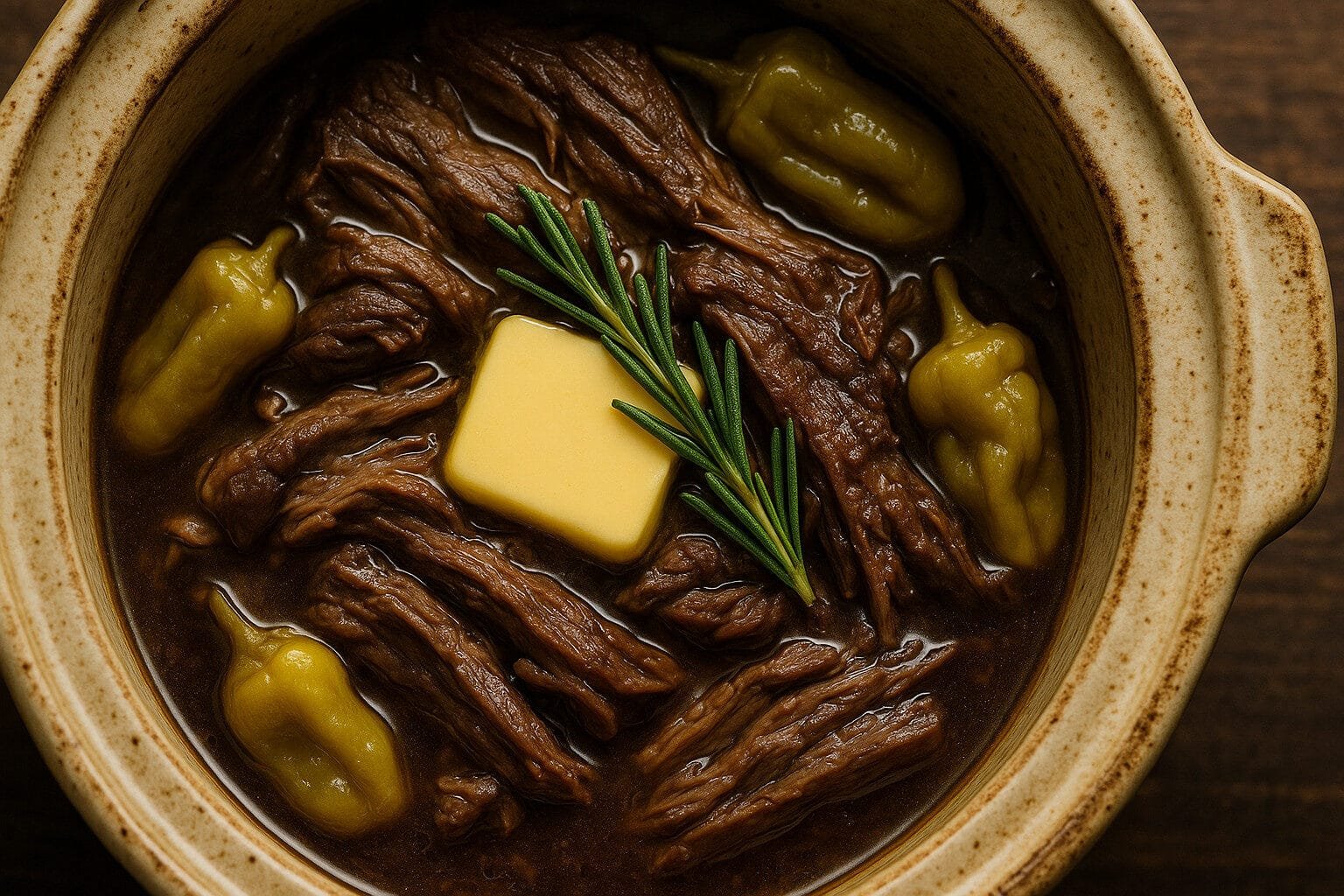
Let’s be honest—the classic Mississippi Pot Roast is a phenomenon for a reason. It’s incredibly flavorful and falls-apart tender. But as a food professional who tests recipes for a living, I’ve always been frustrated by its reliance on store-bought seasoning packets and stick of butter. They’re filled with questionable ingredients, hidden carbs, and unnecessary fat that simply don’t align with a conscious, keto lifestyle. So I took it upon myself to deconstruct and rebuild this icon.
This isn’t just a substitution recipe. This is a from-the-ground-up re-engineering using professional techniques to maximize flavor without the junk. We’re building depth with umami-rich ingredients, leveraging the magic of slow-cooking collagen breakdown, and creating a balanced, pepperoncini-spiked broth that’s actually worth savoring. The result? A pot roast that doesn’t just mimic the original—it surpasses it.
Why This Keto Mississippi Pot Roast Recipe Works
Most home cooks don’t realize that the “set it and forget it” nature of slow cooking actually requires more forethought, not less. You’re building layers of flavor that have to survive and meld over a long cooking time. This recipe works because it addresses the structural weaknesses of the original.
The Secret to Tender, Shreddable Meat
It all comes down to collagen. A chuck roast is laced with it. When subjected to low, slow, and moist heat, that tough connective tissue slowly breaks down into unctuous, silky gelatin. This process is non-negotiable. I find the sweet spot to be around 8 hours on low. High heat? It makes the muscle fibers tense and squeeze out moisture, leaving you with a dry, stringy result. It’s a lesson in patience. That gelatin isn’t just for mouthfeel—it naturally thickens the cooking liquid into a lush, cohesive sauce without a single sprinkle of flour or xanthan gum. That’s a professional kitchen trick right there.
Deconstructing the Flavor Profile for Keto
The classic flavor trio is ranch, au jus, and pepperoncini. My approach was to strip these down to their core components. Ranch is about the herbs (dill, parsley, chives), garlic, and onion with a buttermilk tang. Au jus is fundamentally beefy, salty, and slightly sweet from caramelized onions. By making our own blends, we control the sugar and eliminate maltodextrin and soybean oil. We use powdered buttermilk for tang, real garlic powder (not salt), and a touch of erythritol to mimic the subtle sweetness lost from the packaged au jus. It’s a more complex, rounded flavor.
My Go-To Slow Cooker for Foolproof Results
After testing dozens, I’ve settled on a simple oval-shaped, 6-quart slow cooker with a digital timer. The oval shape accommodates a roast perfectly without cramming it in, allowing heat to circulate evenly. The digital timer is crucial—it switches to “warm” automatically, preventing overcooking if you’re not there the second it finishes. That “keep warm” function is a game-changer for meal prep. I avoid the fancy ones with all the bells and whistles; the basic, consistent heat source is what you’re paying for.
Ingredients for the Ultimate Keto Mississippi Pot Roast
Precision here matters. This is where you build your foundation.
Servings: 6
Prep time: 15 minutes
Cook time: 8 hours on low
Ingredients:
- 3-4 pound chuck roast (look for good marbling)
- 1 tablespoon avocado oil
- 4 tablespoon salted butter, cut into pats
- 1/2 cup beef broth (check for no added sugar)
- 8-10 pepperoncini peppers
- 1/4 cup pepperoncini juice (from the jar)
Homemade Ranch Seasoning:
- 2 teaspoons dried dill weed
- 1 teaspoon dried parsley
- 1 teaspoon dried chives
- 1 teaspoon onion powder
- 1/2 teaspoon garlic powder
- 1/2 teaspoon fine sea salt
- 1/4 teaspoon black pepper
- 1 tablespoon powdered buttermilk (optional, for tang)
Homemade “Au Jus” Seasoning:
- 1 teaspoon onion powder
- 1 teaspoon beef bouillon powder (or crumble 1 cube)
- 1/2 teaspoon garlic powder
- 1/2 teaspoon erythritol (or preferred granulated sweetener)
- 1/4 teaspoon black pepper
- 1/4 teaspoon smoked paprika
Selecting the Right Cut of Beef
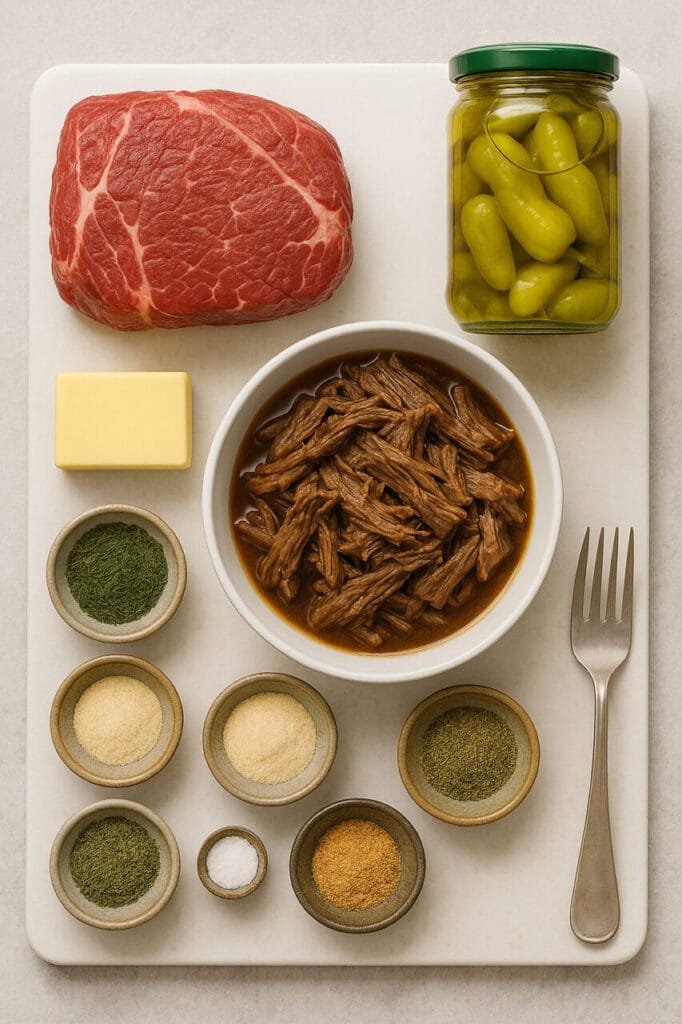
Chuck roast is non-negotiable. It comes from the shoulder, a highly exercised muscle filled with collagen. Don’t be tempted by a leaner cut like sirloin; it will become tough and dry. Look for a roast with consistent, thin streaks of white fat running through it—this is marbling, and it’s your ticket to flavor town. A thick cap of fat on one side is fine; you can trim it slightly if you prefer, but I leave it on to self-baste.
The Keto-Friendly Au Jus & Ranch Seasoning Breakdown
This is the core of the recipe’s innovation. The store-bought packets rely on dextrose and maltodextrin for bulk and to carry flavor. We’re using the dried herbs and spices directly. The powdered buttermilk in the ranch is my secret weapon—it provides that distinct tang without adding liquid. For the au jus, the small amount of erythritol is critical. It doesn’t make it taste sweet; it merely balances the salty, savory notes, replicating the function of the sugar in the original mix. It’s a subtle bit of culinary science that makes a world of difference.
Understanding the Pepperoncini Pepper Role
Pepperoncinis are not just for heat. They’re actually quite mild. Their primary contribution is a bright, tangy, slightly acidic brine that cuts through the rich beef and fat. This acidity is vital—it lifts the entire dish and prevents it from feeling heavy or greasy. Don’t skip the brine from the jar! It’s seasoned with vinegar and salt, and it instantly enhances the cooking liquid. I like to add a few whole peppers for presentation and then slice a few others to disperse their flavor more evenly throughout the roast.
Step-by-Step Cooking Instructions
Prepping Your Roast for Maximum Flavor Absorption
The step everyone wants to skip: searing. And it’s a mistake. Searing is not just about color; it’s about the Maillard reaction—a complex chemical process that creates hundreds of new, deep flavor compounds on the surface of the meat. Pat the roast absolutely dry with paper towels. This is key for a good sear, not a steam. Heat the avocado oil in a heavy skillet until it shimmers. Season the roast generously with salt and pepper and sear it for 3-4 minutes per side, until a dark brown crust forms. This one step adds a foundational layer of flavor that will permeate the entire dish.
Mastering the Slow Cooker Layering Technique
Layering is everything. Place the seared roast in the slow cooker. Sprinkle the homemade ranch and au jus seasoning mixes evenly over the top, rubbing them in gently. Now, place the pats of cold butter directly on the seasoned roast. The butter will slowly melt and carry those fat-soluble herb flavors down into the meat. Pour the beef broth and pepperoncini juice around the sides, not over the top, to avoid washing off the seasonings. Finally, scatter the peppers around the roast. Do not stir.
[content-egg module=Amazon template=list]
Monitoring Doneness Without Thermometer Pokes
A meat thermometer is useless here. Doneness is determined by tenderness, not temperature. After 7 hours, you can start checking. Take two forks and try to pull a piece of meat apart. If it resists, it needs more time. When it shreds effortlessly with just a little pressure, it’s done. Poking it repeatedly with a thermometer only releases precious juices. Trust the process and the fork test.
Serving and Storing Your Keto Creation
Ideal Keto-Friendly Side Dish Pairings
You need sides that can stand up to the bold, savory flavors. Cauliflower mash is the ultimate partner—its creamy, neutral base is perfect for sopping up the incredible juices. Garlicky sautéed spinach or kale works wonderfully. For something with a bit of crunch, a simple radicchio and Parmesan salad with a lemon vinaigrette provides a bitter contrast that cleanses the palate. Roasted radishes are another fantastic low-carb option that mimics the texture of potatoes.
How to Properly Store and Reheat for Meal Prep
This is a meal prep dream. Let the roast cool in its liquid—this keeps it moist. Store it in an airtight container with the juices for up to 4 days. To reheat, do so gently. The microwave can make the meat rubbery. Instead, place a portion in a saucepan over low heat with a splash of extra broth or water, covered, until just warmed through. It also freezes beautifully for up to 3 months. Thaw in the refrigerator overnight before reheating.
Frequently Asked Questions
Is traditional Mississippi Pot Roast keto?
Absolutely not. The hidden carbs are the problem. A single packet of ranch seasoning can contain 10+ grams of carbs from dextrose and maltodextrin. The au jus packet is similar. And while butter is keto, the original recipe’s entire stick is excessive and doesn’t account for the fat already in the chuck roast. My version cuts the carbs to about 3-4g net per serving and uses a more reasonable amount of butter for flavor enhancement, not just fat.
Can I make this recipe without pepperoncini peppers?
You can, but you’ll lose the defining bright, acidic note. If you must, a good substitute would be a combination of 2 tablespoons of white wine vinegar and a few sliced jalapeños (for a different kind of heat). The flavor profile will shift, but it will still be a delicious pot roast.
What’s the best way to thicken the juices for a gravy on keto?
The beauty of this recipe is that the reduced, gelatin-rich juices are already quite lush. If you want a thicker gravy, remove the roast and transfer the liquid to a saucepan. Simmer to reduce and concentrate it. For a classic gravy texture, make a slurry with 1 teaspoon of xanthan gum and 2 tablespoons of cold water. Whisk this into the simmering liquid a little at a time until it reaches your desired consistency. Xanthan gum is powerful, so go slow.
How long can I store leftovers in the refrigerator?
Properly stored in a sealed container with the juices, your leftovers will be at their best for 3-4 days. The flavor often improves after a day as the spices continue to meld.
Can I use a different cut of beef for this recipe?
I don’t recommend it for this slow-cook method. Chuck roast is ideal. If you’re in a pinch, a brisket flat or bottom round will work, but they are leaner and can end up slightly drier. Pork shoulder (Boston butt) would actually be a fantastic alternative, following the same method.
Is this recipe suitable for a low-carb, non-keto diet?
Without a doubt. It’s a whole-food, minimal-ingredient recipe that is naturally low in carbohydrates. It fits perfectly into any low-carb, gluten-free, or sugar-free eating plan. It’s just clean, delicious cooking.
[content-egg module=Amazon template=list]