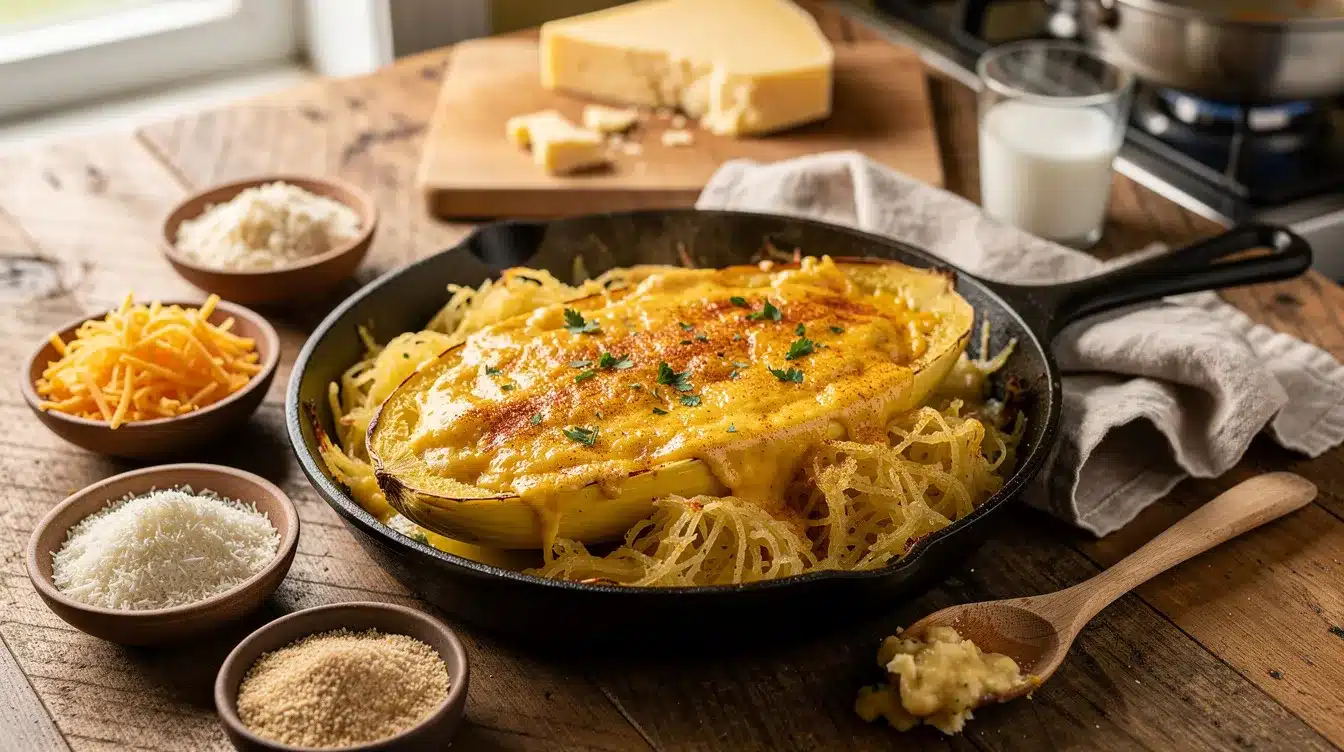
When you are craving the nostalgic, cheesy goodness of traditional pasta but want to stay in ketosis, this Spaghetti Squash Mac and Cheese Recipe is the ultimate solution. By swapping out high-carb noodles for the natural, stringy textures of roasted squash, we’ve created a dish that feels like a “cheat meal” but fits perfectly into your macros. This Spaghetti Squash Mac and Cheese Recipe delivers a rich, velvety cheese sauce that clings to every strand, providing a satisfying dinner with only 8g of net carbs per serving. Whether you are a long-time keto pro or just starting out, this Spaghetti Squash Mac and Cheese Recipe is the comfort food hack you’ve been looking for.
Why You’ll Love This Spaghetti Squash Mac and Cheese Recipe
The brilliance of a Spaghetti Squash Mac and Cheese Recipe lies in the squash itself. Unlike heavy pasta, spaghetti squash is packed with fiber and antioxidants while remaining low in calories. When combined with sharp cheddar and cream cheese, it creates a flavor profile that is remarkably similar to the real thing.
If you have tried our Cheesy Keto Cauliflower Mac and Cheese, you know how well vegetables can stand in for pasta. This Spaghetti Squash Mac and Cheese Recipe offers a slightly different texture—more like long noodles—that many find even more satisfying. For more ways to simplify your kitchen routine, explore our Keto Casseroles and One-Pan Meals or our latest guide on How to Meal Prep Keto Dinners for the Week.
Expert Tips for the Best Spaghetti Squash Mac and Cheese Recipe
To ensure your Spaghetti Squash Mac and Cheese Recipe doesn’t turn out watery or bland, follow these professional tips:
- The Squeeze Trick: After roasting and shredding the squash, place it in a clean kitchen towel and squeeze out as much moisture as possible. This is the secret to a thick, creamy sauce in your Spaghetti Squash Mac and Cheese Recipe.
- Salt the Squash: Before roasting, sprinkle the inside of the squash with salt and let it sit for 15 minutes. This draws out excess water, ensuring a better “noodle” texture.
- Cheese Selection: Use a blend of sharp cheddar for flavor and mozzarella for that iconic “cheese pull.”
- Avoid the Microwave: While you can cook the squash in the microwave, roasting it in the oven creates a deeper, nutty flavor that makes the Spaghetti Squash Mac and Cheese Recipe truly stand out. According to Healthline (External Resource), healthy fats from high-quality dairy are excellent for maintaining energy on keto.
Frequently Asked Questions (FAQ)
1. Is spaghetti squash really low carb?
Yes! Compared to regular pasta, it has about 20% of the carbs. This makes a Spaghetti Squash Mac and Cheese Recipe an ideal choice for weight loss.
2. How do I prevent a watery casserole?
As mentioned, the “Squeeze Trick” is essential. If you skip this, the water from the squash will dilute the cheese sauce.
3. Can I make this Spaghetti Squash Mac and Cheese Recipe ahead of time?
Absolutely. You can roast the squash up to 2 days in advance. Just mix with the sauce and bake when you are ready to serve.
4. What is the net carb count?
One serving of this Spaghetti Squash Mac and Cheese Recipe contains approximately 8g of net carbs.
5. Can I add protein to this dish?
Yes! Adding shredded chicken or crispy bacon bits turns this side dish into a complete Keto Diet Meal.
6. Why is the difficulty level “Intermediate”?
Cutting and roasting a large spaghetti squash can be a bit technical and time-consuming, requiring some basic knife skills.
7. How long do leftovers stay fresh?
Leftovers stay delicious for up to 3 days in the fridge. We recommend reheating in the oven to maintain the texture.
8. Can I freeze this?
We don’t recommend freezing this specific Spaghetti Squash Mac and Cheese Recipe, as the squash can become very mushy upon thawing.
9. What are the best toppings?
A sprinkle of crushed pork rinds or extra parmesan on top before the final bake adds a wonderful crunch.
10. Can I make this dairy-free?
It’s difficult to achieve the same “Mac and Cheese” feel, but you can use cashew cream and nutritional yeast if necessary.
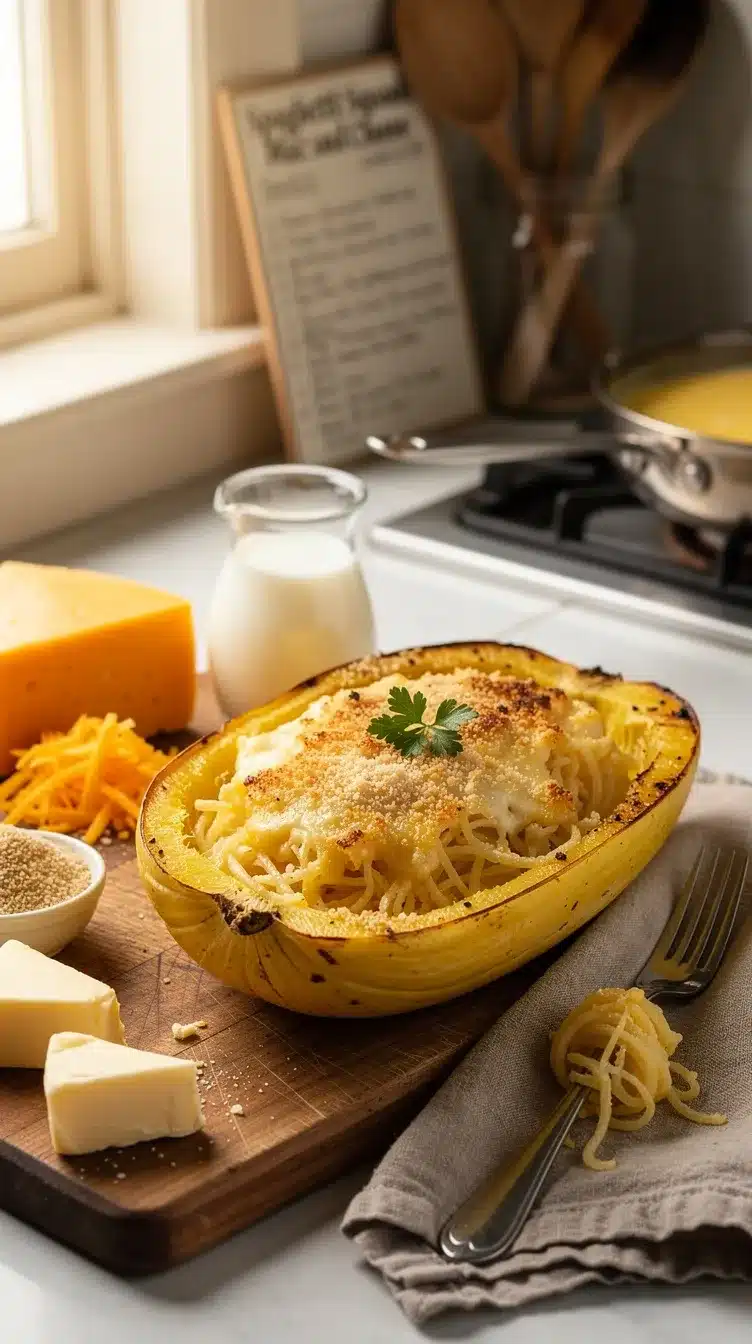
Spaghetti Squash Mac and Cheese
Equipment
- Kitchen towel (for squeezing moisture)
Ingredients
- 1 large spaghetti squash approx 3-4 lbs
- 2 tbsp olive oil
- 1/2 cup heavy cream
- 2 oz cream cheese softened
- 1 1/2 cups sharp cheddar cheese shredded
- 1/2 cup mozzarella cheese shredded
- 1 tsp garlic powder
- 1/2 tsp onion powder
- 1/2 tsp smoked paprika
- 1/2 tsp sea salt
- 1/4 tsp black pepper
- 1/4 cup parmesan cheese for topping
Instructions
- Preheat oven to 400°F (200°C). Cut squash in half and remove seeds.
- Drizzle with oil and salt, roast cut-side down for 45 minutes.
- Scrape out strands with a fork and squeeze out moisture with a kitchen towel.
- In a bowl, whisk cream, cream cheese, and spices. Stir in cheddar and mozzarella.
- Mix the squash into the cheese sauce and transfer to a baking dish.
- Top with parmesan and bake at 375°F for 20 minutes until golden.
Notes
Nutrition
Conclusion
This Spaghetti Squash Mac and Cheese Recipe proves that you can enjoy your favorite childhood flavors without compromising your health goals. It’s rich, filling, and incredibly satisfying. For more low-carb inspiration, check out our Keto Diet for Beginners guide.
Please leave a 5-star rating if this is your new favorite pasta replacement!